Strategy Planner
The Strategy Planner generates a comprehensive, AI-written SEO strategy for the client, covering keyword clusters, target audience personas, a content plan, and a 90-day phased action plan. It's designed to be shared directly with the client as a strategic roadmap or used internally to guide the SEO engagement.
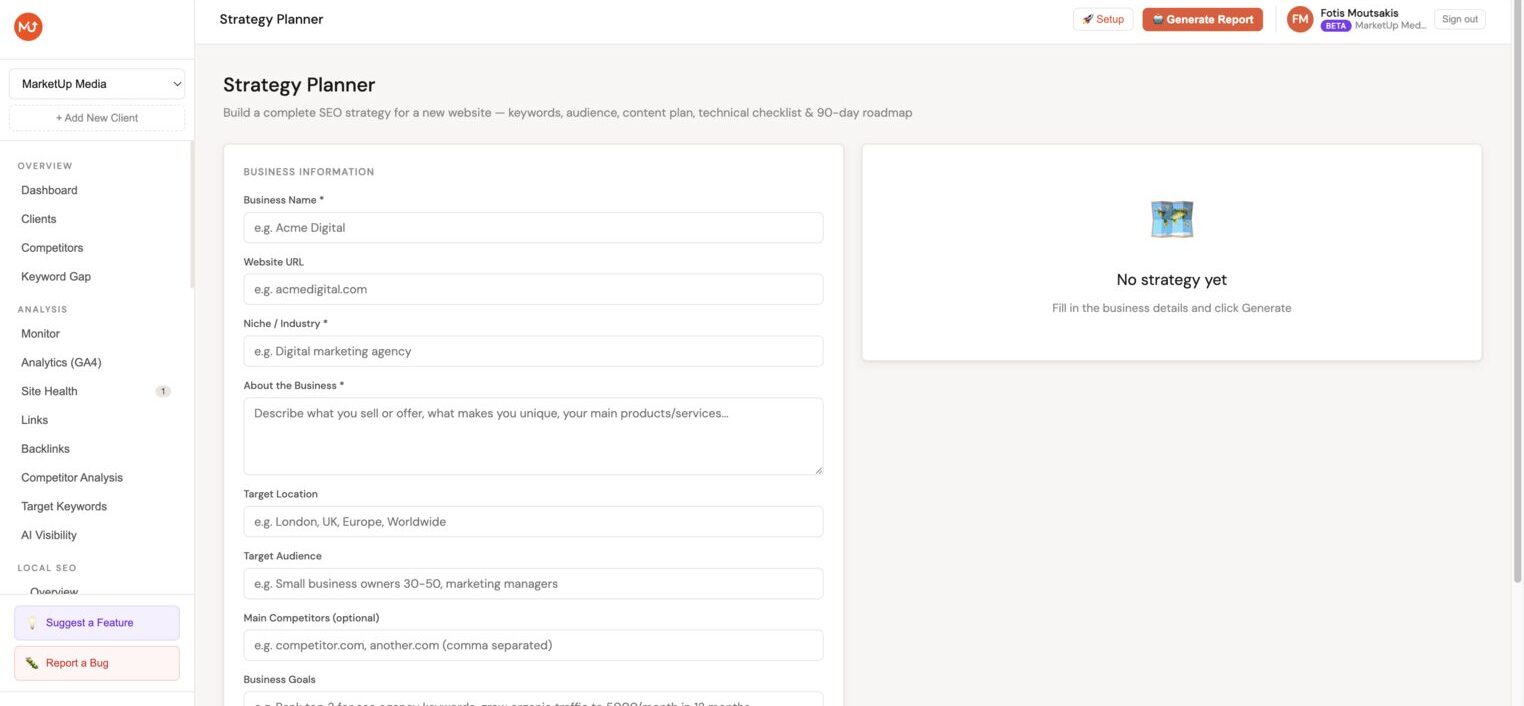
Generating a strategy
-
In the client sidebar, go to Strategy Planner.
-
Click Generate strategy.
-
The strategy is generated using:
- The client's GSC keyword data (top queries, positions, CTR)
- Connected competitor data
- The client's website URL and business context
- Any custom context you provide in the prompt field
-
Generation takes 30–60 seconds.
You can add optional context before generating, for example: "Client is a car rental company in Crete targeting tourists. Currently focused on 301, 302, and 307 redirect types for seasonal pages." This context significantly improves the strategy's specificity.
Keyword clusters
The keyword clusters section groups all identified target keywords into strategic themes. Each cluster is named and categorised by intent:
| Cluster type | Description |
|---|---|
| Core Services | Primary service keywords with high commercial intent |
| Location-Based | Geographic keywords (city, region, neighbourhood) |
| Vehicle / Product Types | Category-specific terms |
| Price-Conscious | Keywords including "cheap", "affordable", "best price" |
| Comparison | "vs" keywords and alternative-seeking queries |
| Brand & Navigation | Branded keywords and direct navigation terms |
Each keyword in the clusters shows:
- Search volume
- Current ranking position (if tracked)
- Intent tag (informational / navigational / commercial / transactional)
Target audience personas
The strategy identifies 3–4 buyer personas based on the keyword and business context. For each persona:
- Name and archetype (e.g. "Budget Traveler")
- Key characteristics, age range, motivations, constraints
- Primary keywords they use
- Content that resonates with them
- Conversion triggers
Personas help prioritise which content to create and what tone and messaging to use for each audience segment.
Content plan
A prioritised list of content pieces to create, split into:
Blog posts
Topics ordered by traffic potential and relevance, each with:
- Suggested title
- Target keyword
- Estimated search volume
- Content type (How-to guide, Listicle, Comparison, Informational)
- Recommended word count
Landing pages
Service or location pages to create or strengthen, each with:
- URL suggestion
- Target keyword
- Why this page is needed (gap vs competitor coverage)
90-day action plan
The 90-day plan is broken into three phases:
Phase 1: Foundation & Technical (Days 1–30)
Fixes and groundwork, technical SEO issues, core page optimisation, meta tag cleanup, schema implementation, sitemap and indexing verification.
Phase 2: On-Page Optimisation (Days 31–60)
Content improvements, optimising existing pages for target keywords, improving internal linking, updating underperforming pages, and launching priority new content.
Phase 3: Performance & Content (Days 61–90)
Growth activities, content publishing at scale, link building outreach, monitoring and iteration, reporting setup.
Each action in the plan has a Task button (adds to Minorank tasks) and an Asana button (pushes to Asana).
Downloading the strategy
Click Download report to export the strategy as a PDF. The PDF is formatted for client presentation, clean, branded, and structured as a strategic document rather than a technical dump.
Next steps
- Blog Post Planner, convert the content plan into a month-by-month content calendar
- Tasks, manage the 90-day action plan items
- Competitor Analysis, validate keyword clusters against competitor coverage